
Sales leaders do not need more call recordings. They need a clearer way to know where their attention will make the greatest difference.
Every manager faces the same constraint. Reps hold more buyer conversations than one leader can attend, review, or coach. Between forecasts, deal strategy, recruiting, internal meetings, and rep requests, only a small portion of the team’s daily execution becomes visible.
Managers fill the gap with attended calls, CRM notes, pipeline summaries, rep-selected examples, memory, and instinct. They care about coaching, but they are working from a narrow sample.
The problem is not commitment. It is visibility.
AI can change the math by analyzing more conversations, identifying patterns that deserve attention, and helping leaders examine the quality of their own coaching.
The goal is not automated management. It is more focused, evidence-based leadership.
More Recordings Did Not Solve the Coaching Problem
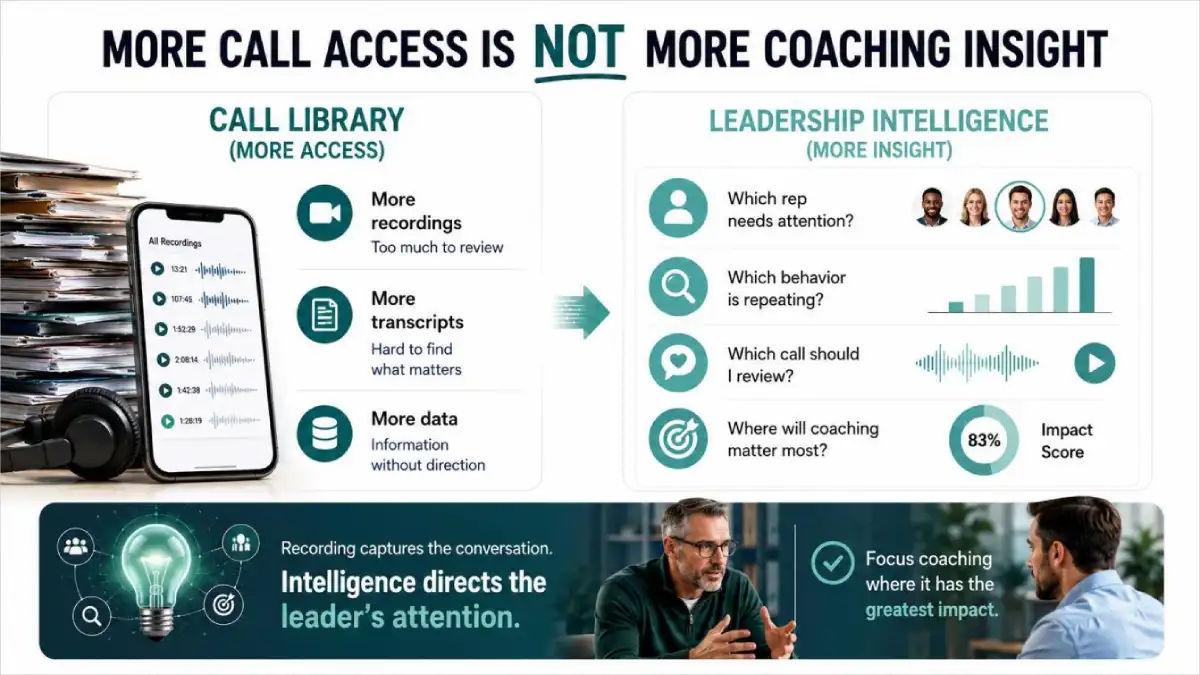
Conversation-recording platforms gave leaders access to calls they did not attend. Managers can revisit meetings, search transcripts, and share examples. Those capabilities matter, but access is not the same as insight.
A larger call library still leaves the manager deciding which conversations deserve review, whether an issue is isolated or repeated, which rep needs attention, and what intervention is most likely to help.
The bottleneck moves from attending calls to finding the right call, locating the right moment, and connecting the behavior with the sales process.
Recording captures the conversation. Intelligence directs the leader’s attention.
Leaders do not need to review every second of every call. They need a reliable way to find the moments where human judgment will matter most.
AI Should Direct Leadership Attention
Managers are often pulled toward the most urgent deal or the loudest rep. That can solve an immediate problem while leaving the underlying behavior unchanged. AI can review conversations across the team and help leaders decide where their attention will make the greatest difference.
Which rep needs support? Which call best illustrates the issue? Which behavior is appearing across several conversations? Which strength deserves reinforcement?
The goal is not to score every call equally. It is to move the manager from random sampling to informed attention.
AI helps the leader find where to look.
Coach the Pattern, Not the Latest Fire
Finding the right call is only the first step. The manager still needs to determine whether the issue is isolated or part of a recurring pattern.
One missed question may be situational. The same missed question across five calls signals a development need.
Coaching the latest deal may solve an immediate problem. Coaching the pattern helps the rep handle similar situations across future opportunities.
Useful evidence should show what happened, how often it occurred, and where the rep can apply a different behavior next.
AI can help identify the pattern. The manager helps the rep change it.
AI Can Hold Up a Mirror to the Manager
Better visibility into rep behavior does not automatically produce better coaching.
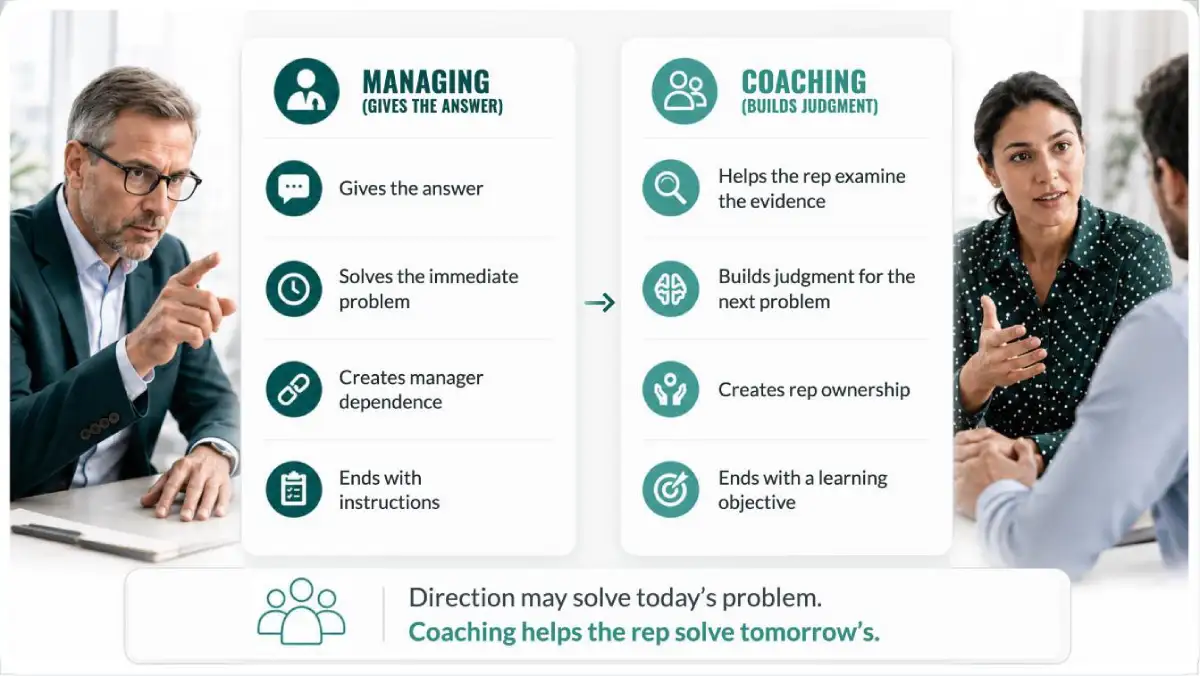
A manager can have strong deal instincts and still create dependence when every one-on-one ends with the leader supplying the answer. The immediate deal may benefit, but the rep does not learn how to diagnose the next situation.
AI can analyze deal reviews, one-on-ones, and coaching conversations to identify patterns in the manager’s behavior. Did the leader ask questions or move straight to direction? Did they probe beyond the rep’s first answer? Did they explore the behavior behind the outcome? Did the rep leave with ownership and a clear learning objective?
This evidence may be uncomfortable, but it reveals the difference between coaching intent and coaching impact.
Managing gives the answer. Coaching helps the rep learn how to reach it.
Suppose a rep says procurement is delaying the deal. A directive response supplies the next action. A coaching response begins by asking what evidence supports the conclusion, who owns the decision, which assumption needs to be tested, and what the rep has already tried.
The manager may still need to give direction. Urgent risk sometimes requires it. But when the goal is development, questions help the rep build judgment instead of dependence.
Managers need an improvement loop too.
Good Coaching Builds Judgment, Not Dependence
The quality of a coaching conversation should be judged by what the rep can do afterward.
A strong conversation helps the seller recognize the real issue, test an assumption, identify what they missed, choose a different behavior, and take ownership of the next action.
“Do better discovery” is not a useful learning objective. “Before presenting the solution, ask the buyer to explain the operational consequence and who feels it” gives the rep something specific to practice.
The manager does not need to be the smartest person in every conversation. The manager needs to help the seller think more clearly when the next difficult situation appears.
The outcome of coaching is not agreement with the manager. It is stronger judgment in the rep.

AI Finds the Pattern. The Leader Coaches the Person.
AI can identify which rep, behavior, call, or strength deserves attention. It cannot fully explain why the behavior occurred.
A seller may move to the solution too early because they lack discovery skill, feel uncomfortable with an executive, misread the buyer’s readiness, or feel pressure to demonstrate progress.
The manager interprets the context, chooses the question, and decides how to develop the person.
AI finds the pattern. The leader coaches the person.
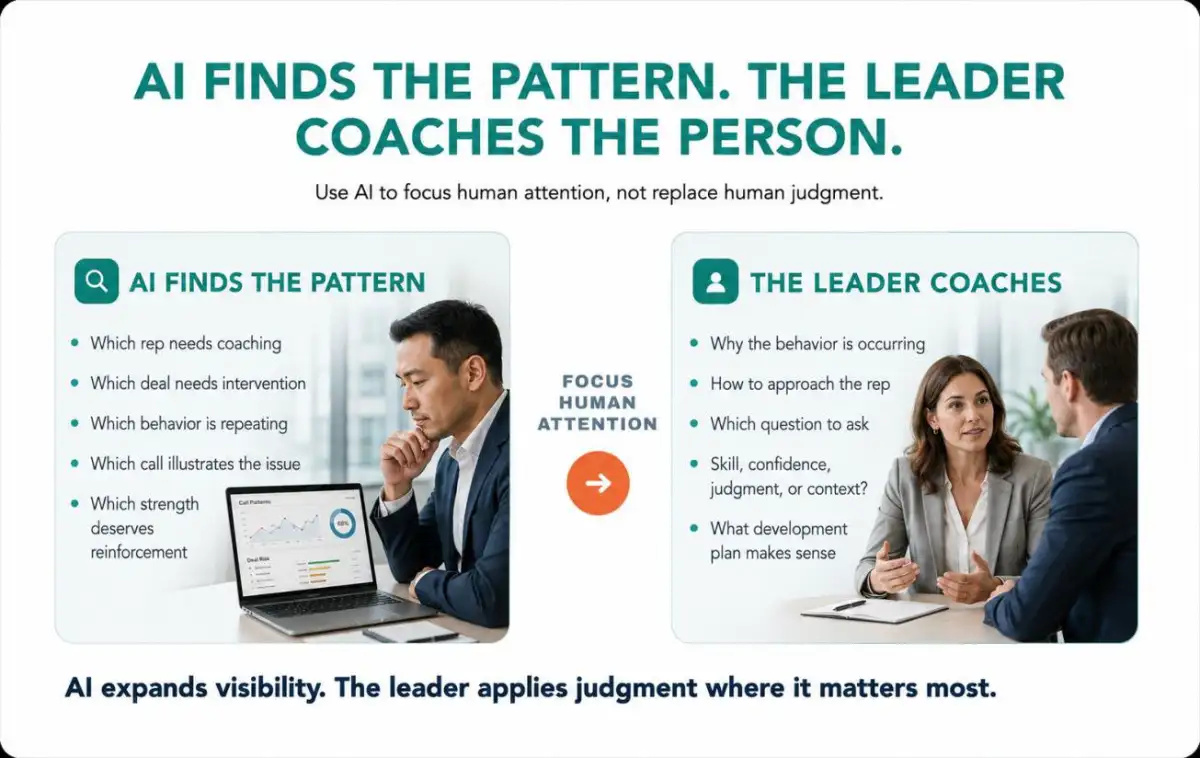
Figure 1. AI identifies the pattern. The leader applies judgment and coaches the person.
Deal Inspection and Coaching Serve Different Purposes
The same conversation evidence can support two different leadership discussions. Deal inspection asks what the opportunity needs. Coaching asks what the rep needs to learn.
When a deal lacks access to a key stakeholder, inspection focuses on how to protect the opportunity. Coaching explores why the seller’s deals repeatedly depend on one friendly contact and what should change earlier in the process.
A manager may need to do both in the same meeting, but the purposes should remain clear. First, protect the active opportunity. Then help the seller avoid recreating the same risk.
Fixing the deal may save one opportunity. Improving the seller changes the next ten.
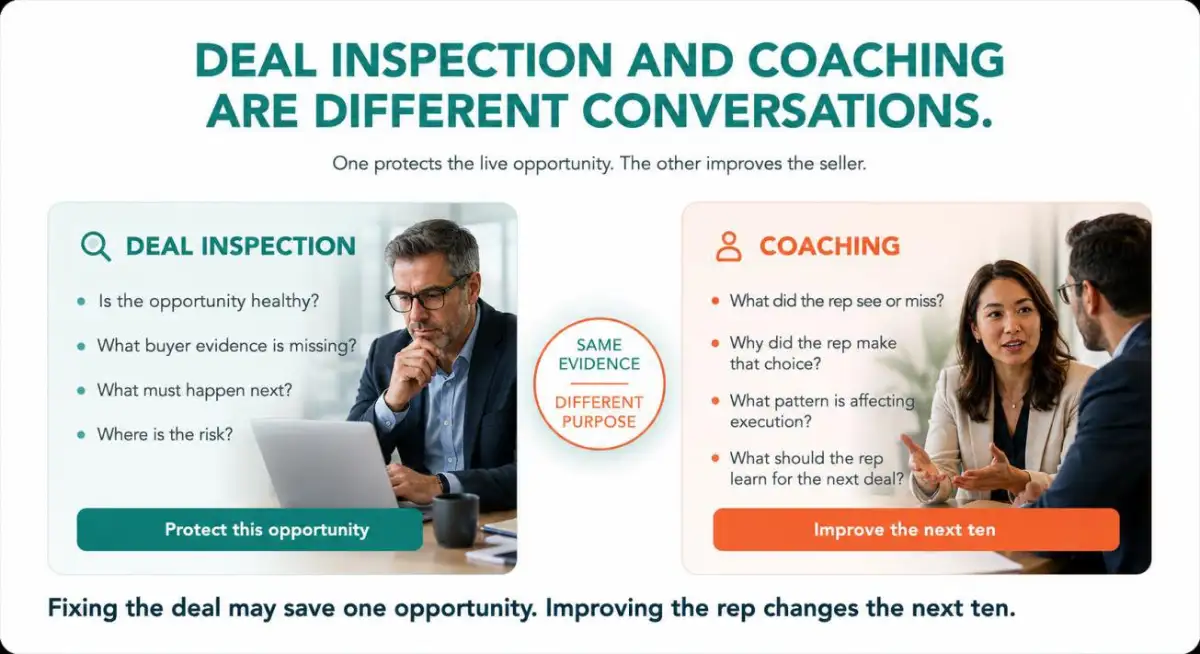
Figure 2. Deal inspection protects the current opportunity while coaching improves seller behavior in future deals.
Measure Coaching Quality, Not Coaching Activity
The number of one-on-ones completed proves that meetings happened. It does not prove that judgment or behavior improved. A stronger scorecard examines whether leadership attention is reaching the right situations and whether the manager’s coaching is becoming more effective.
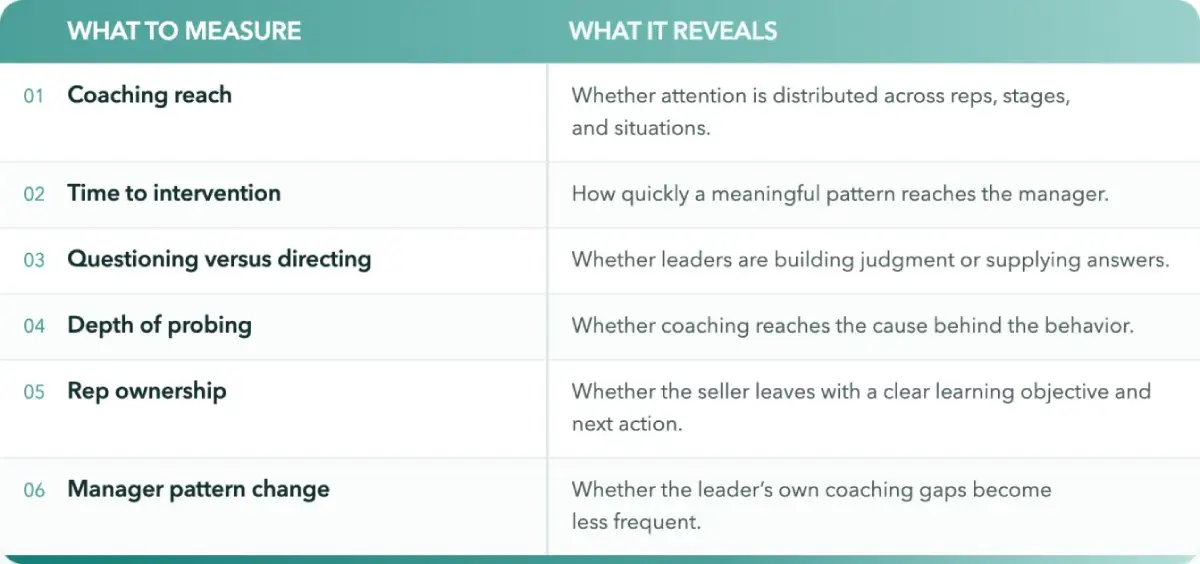
Use these measures as development signals, not surveillance. Managers and sellers should understand what is being assessed and have access to the evidence.
Start with two or three coaching behaviors. Establish a baseline and review whether the manager’s questioning, probing, and development objectives improve over time.
The goal is not more coaching activity. It is better coaching that produces stronger seller judgment.
Scale the Reach, Not the Distance
A manager cannot attend every call. They can still understand what is happening across the team. AI can identify where attention matters, show which behaviors repeat, surface strengths worth reinforcing, and help leaders examine how they coach.
It should not create distance between the manager and the rep. A poor implementation adds scores and encourages leaders to talk about people instead of with them. A strong implementation gives the manager a reason to engage around a specific pattern, a thoughtful question, and a clear development objective.
The manager spends less time hunting for problems and more time helping sellers understand and solve them.
AI changes the coaching math by helping leaders see more, focus sooner, and coach better.
Key Takeaways
- The coaching constraint is not manager commitment. It is limited visibility and attention.
- More recordings do not solve the problem unless leaders know which moments deserve review.
- AI should direct attention to meaningful patterns, not produce scores without context.
- The manager still interprets why a behavior occurred and how to develop the person.
- Strong coaching builds seller judgment instead of manager dependence.
- Deal inspection protects an active opportunity. Coaching helps the rep avoid repeating the risk.
- AI can help leaders assess their own questioning, probing, and tendency to give answers.
- Coaching success should be measured by changes in judgment and behavior, not the number of one-on-ones completed.
Coach More of the Calls That Matter
SAMI.ai is a SalesSparx AI sales (powered by Augment) performance system that analyzes every conversation, identifies the patterns that deserve leadership attention, and gives managers evidence for more focused coaching, without requiring them to review every call.