


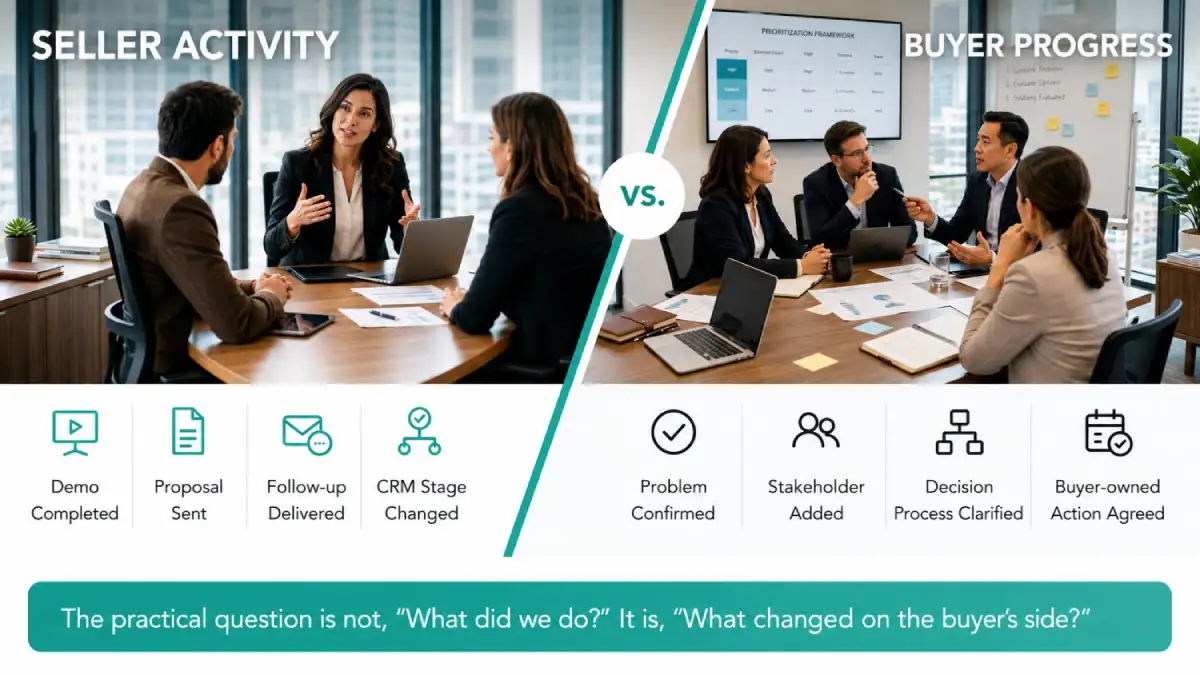
Real progress shows up in the buyer’s actions and commitments. Did they confirm the business problem? Introduce another stakeholder? Clarify the decision process? Agree to validate the business case? Commit to a next action?
A deal has not advanced simply because the stage changed. It has advanced when the buyer makes commitments, involves the right people, and moves closer to a decision. Otherwise, the seller moved the stage, but the buyer may not have moved at all.
That distinction matters in healthcare B2B, where long sales cycles, large buying committees, security reviews, clinical stakeholders, procurement steps, and internal politics can generate plenty of activity without moving the buyer closer to a decision. AI can help sales teams see the difference.
Activity Creates Confidence. Buyer Actions Create Progress.
Healthcare deals often stay active for many months. There are meetings, demos, follow-up emails, internal discussions, and proposal revisions. That activity can make an opportunity feel healthy even when the underlying buying process has barely changed.
Seller activity tells you what your team did. A demo happened. A proposal was sent. Another meeting was booked. The CRM stage changed. Buyer progress is different. The buyer confirmed the problem and its impact, brought another stakeholder into the process, explained how the decision will be made, helped quantify the cost of doing nothing, or committed to a next step with an owner and date.
A productive meeting can still leave the deal exactly where it started. The buyer may have enjoyed the conversation but made no commitment. A new stakeholder may have attended without supporting the initiative. The next meeting may be scheduled without moving the organization closer to a decision.
The practical question is not, “What did we do?” It is, “What changed on the buyer’s side?”
Assess Deal Health With Buyer-Confirmed Evidence
Most pipeline reviews rely heavily on seller interpretation. The rep says the buyer is interested, the champion is strong, the deal has urgency, and the proposal was well received. Those statements may be sincere, but they are not the same as evidence.
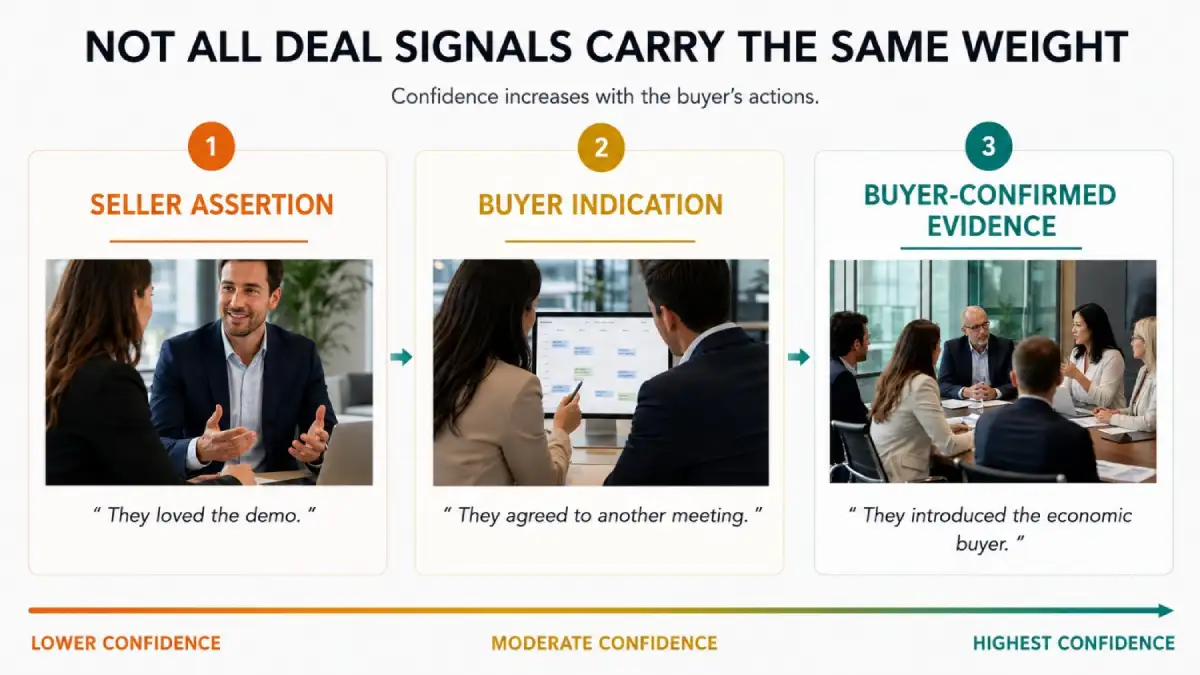
A useful deal-health assessment separates three levels of confidence. Seller assertion is what the rep believes, such as “They loved the demo” or “They want to move quickly.” Buyer indication is a positive signal that remains incomplete, such as agreeing to another meeting or saying the initiative has support. Buyer-confirmed evidence is stronger because the buyer has taken action or supplied information that validates progress, such as introducing the economic buyer, sharing the approval sequence, quantifying the cost of delay, confirming a decision date, or agreeing to co-develop the business case.
Interest is useful. Commitment is evidence.
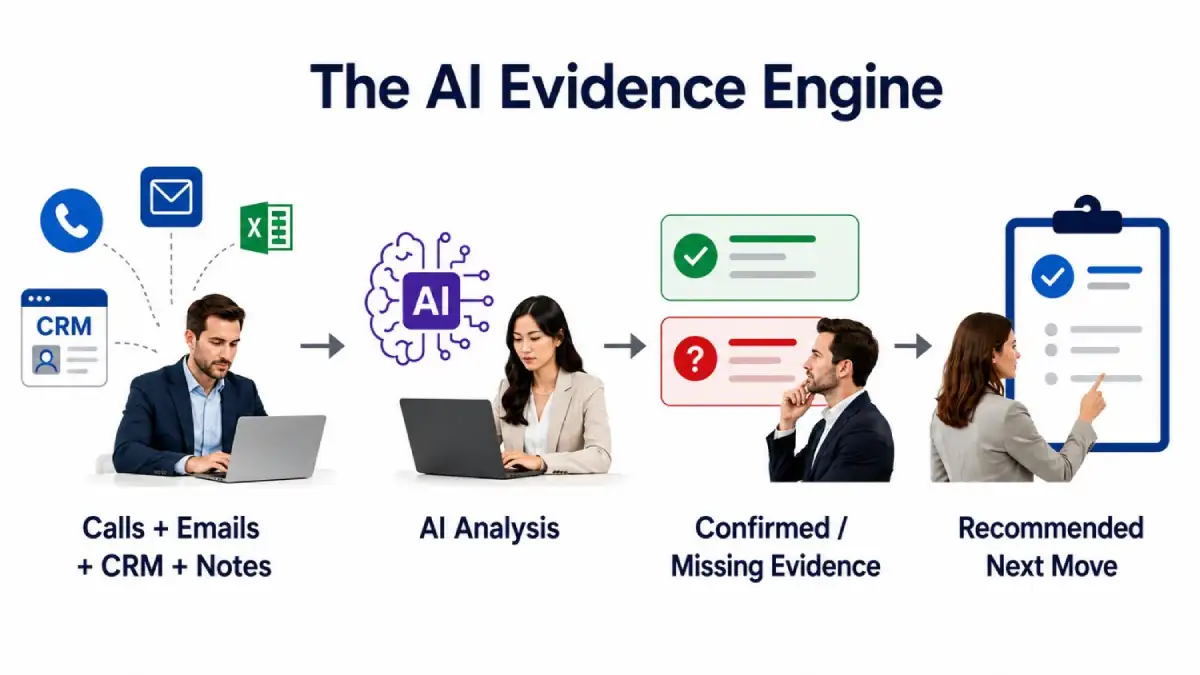
AI can analyze call transcripts, account history, emails, meeting notes, and CRM data against the sales process to identify what the buyer has confirmed and what is still missing. It can show which stage objectives were achieved, whether the CRM stage matches the conversation, where the seller may have skipped ahead, and which gap should shape the next call.
AI does not define progress. The sales process must do that first. Deal-health analysis becomes useful only when the organization has clearly defined what must be true before an opportunity earns the right to move forward.
The Signals That Show a Deal Is Drifting
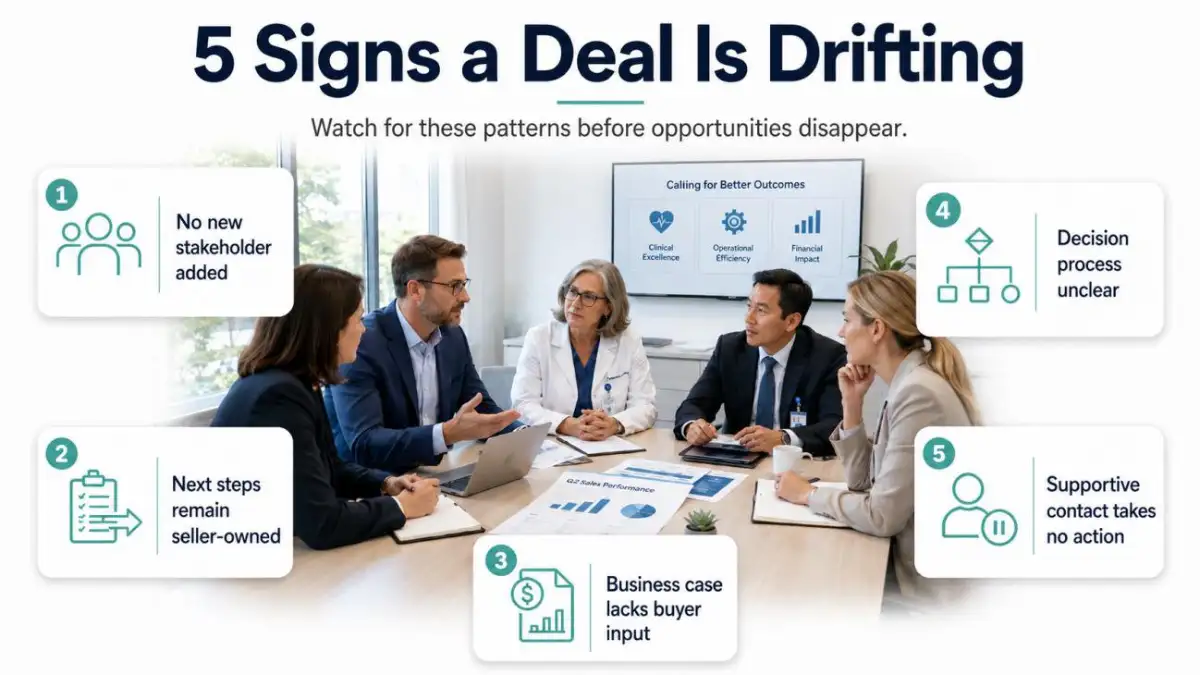
Healthcare deals rarely fail all at once. They drift before they disappear. AI can help identify patterns that suggest an opportunity is quietly weakening: no new stakeholders are joining, next steps remain seller-owned, the business case lacks buyer-provided numbers, the decision process stays vague, or the person described as a Coach talks positively but takes no action.
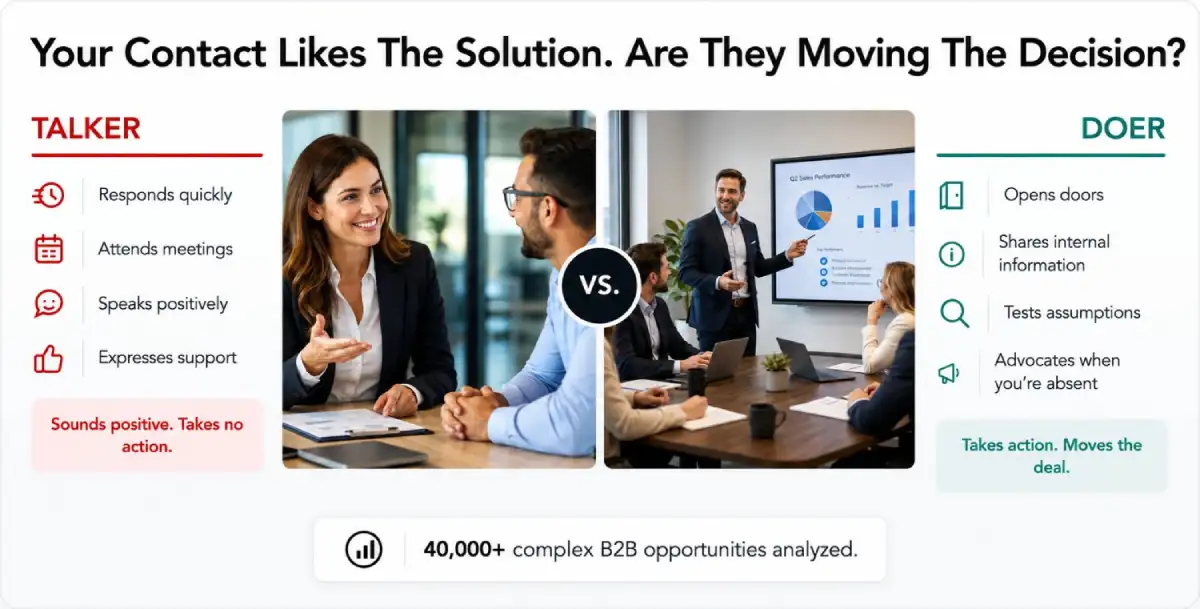
That last signal deserves closer attention. Many sellers believe they have a strong champion because the contact is responsive, enthusiastic, and willing to attend meetings. Enthusiasm alone does not move a deal through the organization.
A true buyer-side Coach behaves like a Doer. They open doors, share internal information, help navigate the decision process, test assumptions, and advocate for the change when the seller is not in the room. A Talker may like the solution and still leave the deal exposed.
This distinction matters because SalesSparx research across more than 40,000 complex B2B opportunities identified the buyer-side Coach, specifically a Doer rather than a Talker, as the strongest predictor of deal success. The question is not whether the contact is supportive. It is whether their actions are helping move the deal forward inside the organization.
Turn Deal-Health Gaps Into the Next Move
A deal-health score has limited value if it only describes the problem. Every gap should lead to an action.
This is where AI becomes more useful than a static scorecard. It can connect a gap to the next conversation, recommend questions, prepare a call plan, and help the rep focus on the evidence required to move the deal. The goal is not to score the past. It is to improve the next move.
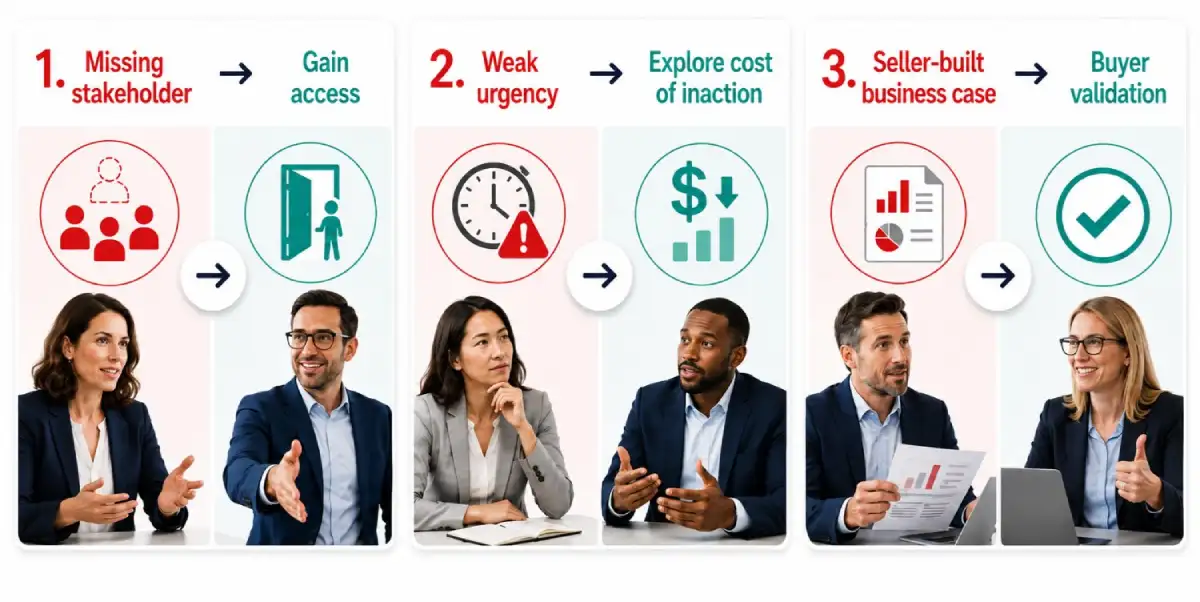
A deal-health score is useful only when every red or yellow signal becomes a clear action.

Run Pipeline Reviews as Evidence Audits
Traditional pipeline reviews often ask for updates: What stage is the deal in? When will it close? Do we have a champion? Is there urgency? A stronger review asks for evidence.
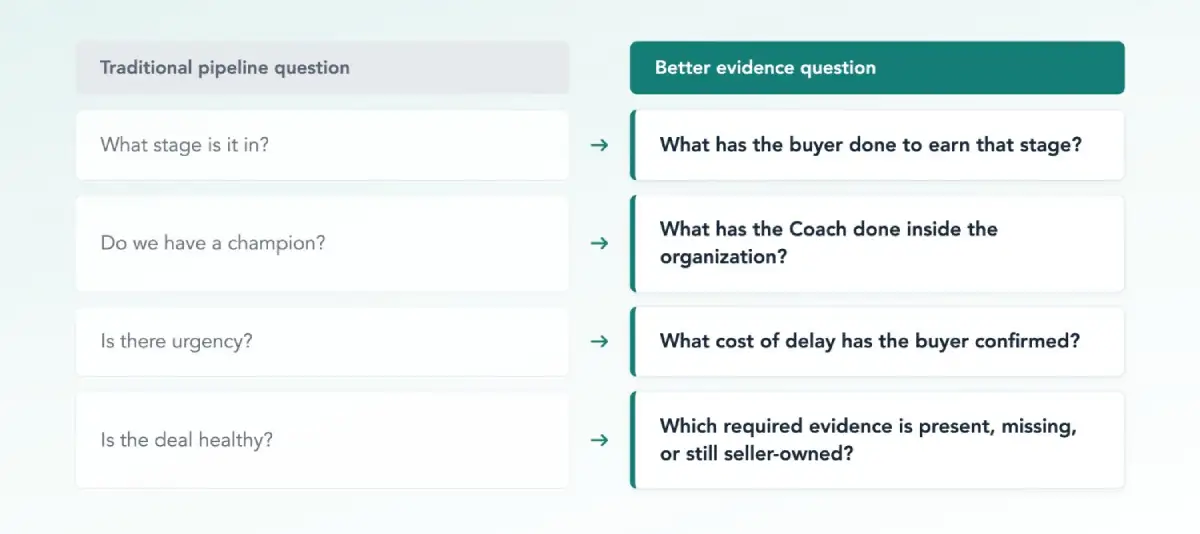
This changes the pipeline review from a confidence poll into an evidence audit. AI can support the review by comparing call evidence with the CRM stage, identifying missing criteria, and surfacing mismatches before the forecast meeting.
Leaders can track whether stage changes are supported by call evidence, whether opportunities have buyer-owned next steps, whether the decision process is confirmed, and how often the CRM stage conflicts with the conversation. The goal is not a cleaner CRM. The goal is a more truthful pipeline.
What Success Looks Like
AI-assisted deal-health assessment is working when deals advance because buyers make commitments, CRM stages reflect actual buyer progress, risk is identified early enough to address, managers coach from conversation evidence, and weak deals are corrected or disqualified before they distort the forecast.
A seller can change the stage in seconds. A buyer moves the deal through decisions, commitments, access, and action. AI helps sales teams see the difference while there is still time to respond.

Key Takeaways
- CRM movement is not buyer progress. A deal advances when the buyer makes commitments and moves the decision forward.
- Buyer-confirmed evidence should carry more weight than seller confidence.
- AI is most useful when it compares conversation evidence with the sales process and exposes gaps early.
- A strong Coach acts inside the organization. Positive sentiment without action is not enough.
- Every deal-health gap should lead to a specific next move.
- Pipeline reviews should audit evidence, not poll confidence.
See What Your Pipeline Is Actually Telling You
A Sales Acceleration Discussion is an expert-led working session designed to identify where your pipeline is relying on seller interpretation, where buyer evidence is missing, and how AI can make deal progress more visible and coachable.

