
FOR GROWTH-STAGE B2B COMPANIES
A fast readiness assessment that exposes where revenue stalls when the hero steps away, and what it takes to build a sales motion your team can own.

If Every Big Deal Needs the Hero, You Don't Have a Sales System
“I close deals no one else on the team can.”
READINESS ASSESSMENT
What You Get from This Assessment
You get an honest picture of how ready your company is to grow beyond hero-led sales, and a clear view of what to fix first.
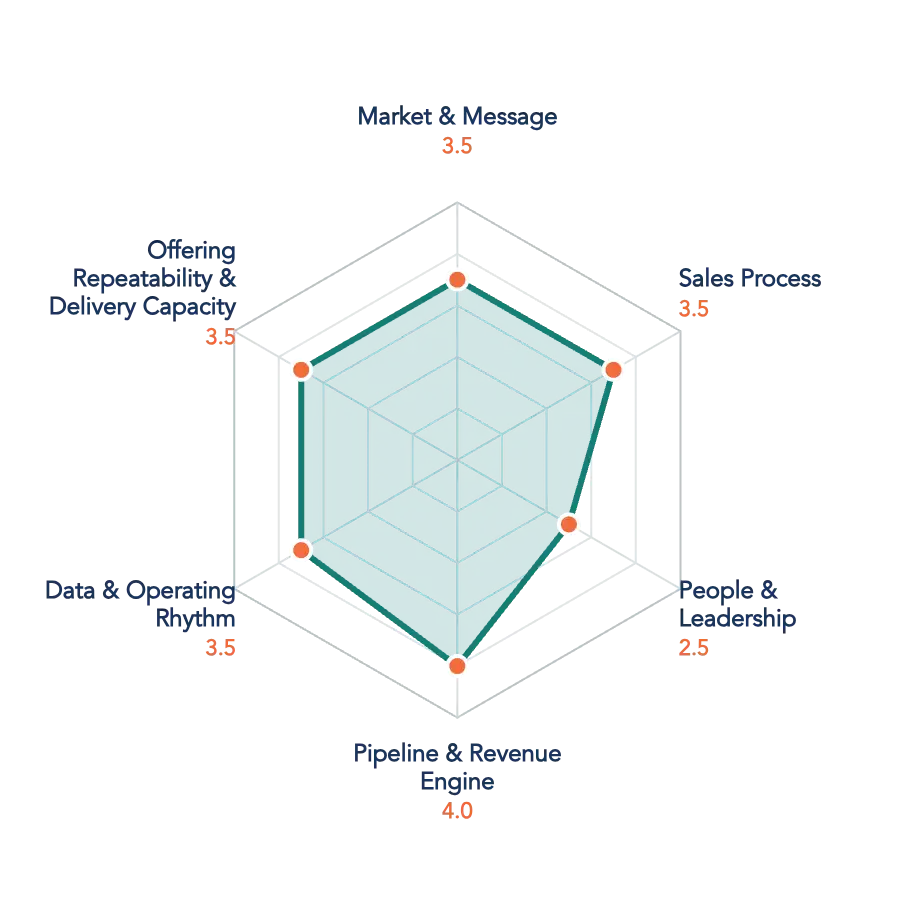
A readiness score across six dimensions that determine sales scalability.
A clear map of hero dependencies showing exactly where deals still rely on you: story, relationships, negotiation, or close.
Actionable insights prioritized by revenue impact showing which changes free up your time fastest and build repeatable growth.
A starting point for transition conversations with your sales leader, board, or investors, grounded in evidence, not gut feel.
THE PLAN
From Hero-Led to Team-Led in Three Steps
Take the Assessment.
Answer a few questions about how deals are won today.
See Your Readiness Map.
Get your scores across six dimensions, pinpoint your biggest hero dependencies, and see which gaps matter most.
Build the Transition Plan.
Walk through your results in a Sales Acceleration Discussion and leave with a sequenced path to a sales motion that wins without the hero.
WHAT WE MEASURE
Six Signals That Predict Whether Sales Can Scale Beyond the Hero
Each dimension is graded on the FUSE maturity scale, from Emerging to Basic to Advanced to Leading, so you can see exactly how far each part of your motion is from running without the hero.

Market & Message
Can everyone articulate why change, why now, and why you, or does the story only land when the hero tells it?

Sales Process
Does your team follow one repeatable process, or does every deal still depend on your instinct?

People & Leadership
Can your sellers lead complex stakeholder conversations, or do they still escalate them to the hero?

Pipeline & Revenue Engine
Does pipeline arrive through a defined ICP, clear personas, and consistent messaging? Or does new business still start with your network?

Offering Repeatability & Delivery Capacity
Do clients get the promised outcome without the hero, and become evangelists who drive expansion?

Data & Operating Rhythm
Do your CRM, content, and analytics tools give you visibility into deals you are not personally touching?
The Cost of Staying the Hero
When the hero stays in every deal, the price shows up everywhere: pipeline, people, and enterprise value.
Growth Capped by Your Calendar
Revenue can only grow as fast as your time, and your time is already maxed out.
Slow Rep Ramp, Fast Rep Churn
Without a repeatable system, new sellers guess, struggle, and leave, resetting the clock.
Deals Die When the Hero Steps Away
Deals stall when your attention shifts to product, fundraising, or delivery.
Forecasts No One Trusts
Pipeline depends on your gut, leaving the board with stories instead of evidence.
Valuation Discount
Hero dependency creates risk. A revenue engine that runs without the hero creates value.
You Never Get Your Real Job Back
Strategy, product, and partnerships wait while you keep carrying the sales load.
CLIENT SUCCESS
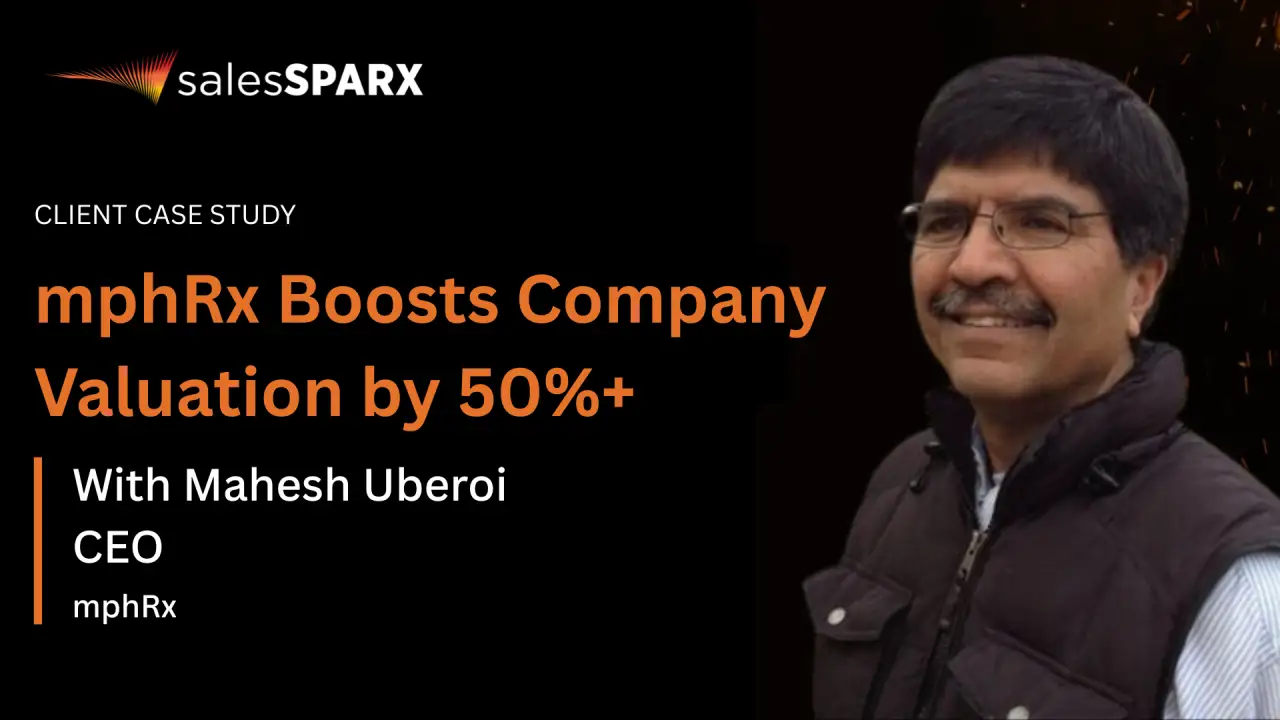
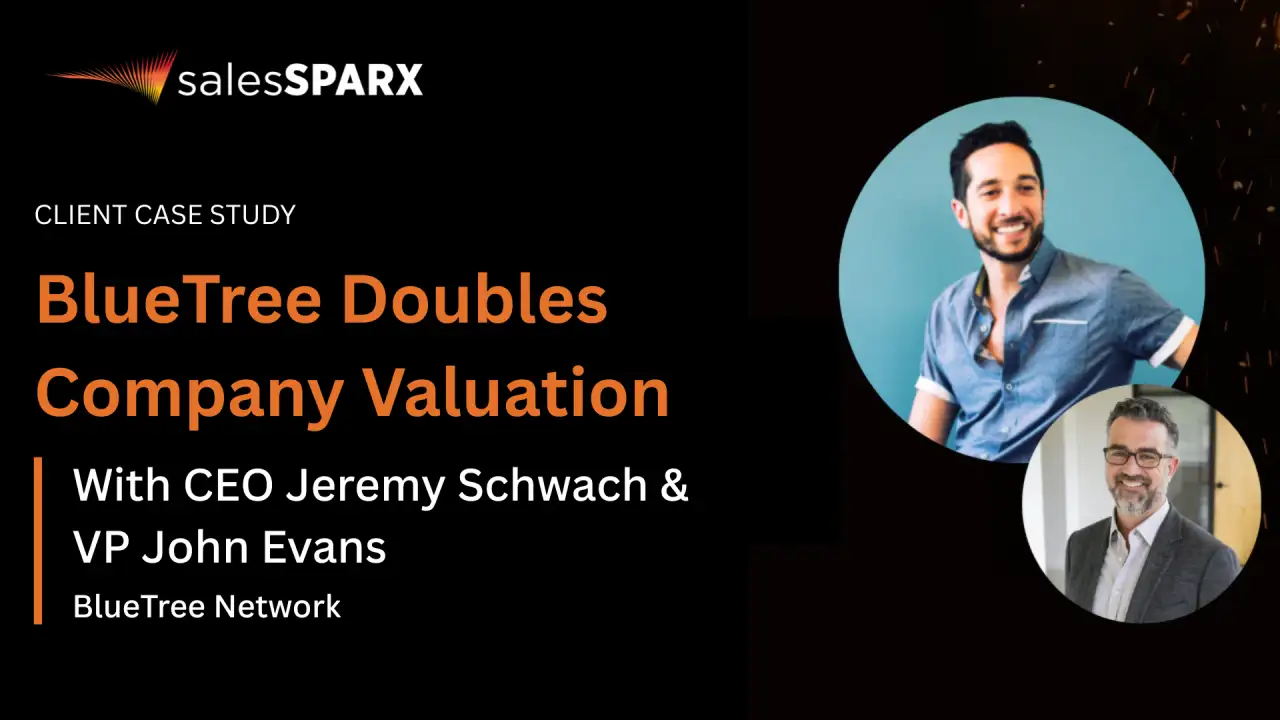
Heroes Who Got Out of the Bottleneck
Companies on what changed when winning stopped depending on them.
WHY SALESSPARX
Because Getting Out of the Deal Room Takes More Than a New Hire
Why Change?
Hiring sellers does not end hero-led sales. Without a shared story, structured process, and coachable practice, they inherit your quota, not your instincts. You need a system that turns what you know into something the team can learn, repeat, and improve.
Why Now?
Every quarter you remain the bottleneck compounds the cost. Deals wait on your calendar, sellers struggle to win without the hero, and hero dependency limits enterprise value. This transition takes quarters, not weeks, so start before growth stalls.
Why Us?
SalesSparx turns hero instinct into a repeatable revenue engine. FUSE maps the gaps and sequences the transition. Shared Vision Selling gives your team a structured, coachable sales process. We do not stop at slides. We build the system that gets you out of the deal room.
Find Out How Ready You Are
Ten minutes now can save you another year in the bottleneck. Take the assessment, see your readiness map, and start building the sales motion that grows without the hero.
FREQUENTLY ASKED QUESTIONS
Healthcare B2B sales, answered.
How do I know if my company is too dependent on hero-led sales?
The clearest signals are structural: win rates drop sharply on deals the hero does not touch, new sellers take a year or more to ramp because there is no documented process to learn, buyers ask for the hero by name at key stages, and revenue dips whenever the hero shifts attention to product or fundraising. The Beyond Hero-Led Sales Readiness Assessment measures these dependencies across six dimensions of GTM maturity and shows which ones are constraining growth.
When should a hero step back from sales?
The transition should begin before it feels urgent, typically once the company has product-market fit and repeat wins in a defined segment. The mistake most heroes make is treating the transition as a hiring event rather than a systems project. Before stepping back, the value story, qualification criteria, and sales process need to be codified into something coachable. Shared Vision Selling provides that structure, turning the hero’s instincts into a practice the whole team can run.
Why do sales teams fail after the hero steps back?
Most fail because the hero’s knowledge never transferred. The story, the relationships, and the judgment about which deals to pursue lived in one person, and the new team inherited targets without the system that produced them. Fixing this requires a maturity gap analysis across the value proposition, offering, marketing, sales, delivery, and enablement technology, then sequencing the fixes. That is exactly what the FUSE process was built to do.
How long does the transition from hero-led sales take?
For most B2B companies in the 5 to 100 million revenue range, building a sales motion that reliably wins without the hero takes two to four quarters of focused work. Companies that follow a structured path typically see meaningful movement earlier, because the first fixes, such as a unified value story and a shared qualification standard, lift the whole team’s performance while deeper process changes take hold.