

Too often, the first visible signal drives the decision. A large health system gets attention because its name carries weight. A content download is treated as buying intent. A new executive appointment triggers outreach before anyone asks whether the account fits or the event matters.
The better question is whether the evidence adds up. Does the organization fit the market? Has something changed that may create a reason to act? Are people inside the account showing relevant interest?
AI can help connect those signals and apply the same account criteria across a much larger market than a seller could evaluate manually. The value is not more activity. It is a better reason to act.
Stop Treating Every Signal Like an Opportunity
Healthcare companies often sell into a defined market of health systems, hospitals, medical groups, payers, digital health companies, life sciences organizations, or healthcare service providers. A defined market should make focus easier, but teams still tend to react to whatever signal is most visible.
Sales may favor the largest names. Marketing may elevate the latest content download. A sales-intelligence alert may trigger outreach before anyone checks whether the organization belongs in the target market or whether the event connects to a problem the company solves.
Coverage metrics can make a team look busy without improving focus. A stronger practice asks a harder question: Which accounts deserve attention now, and what evidence supports that decision?
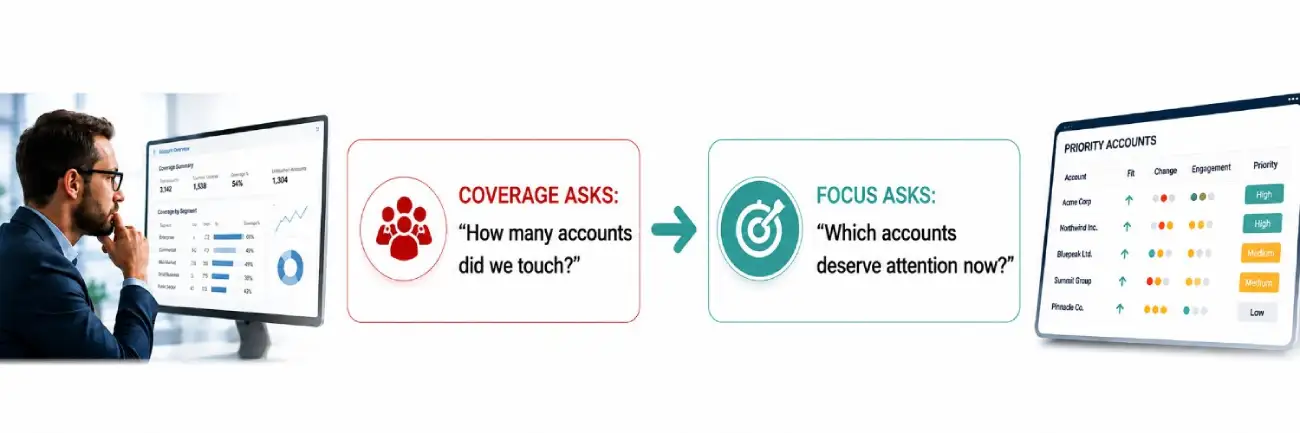
That is the role AI can play in prioritization: helping the team weigh several pieces of evidence together instead of reacting to whichever signal appeared most recently.
What AI Can and Cannot Do
AI does not create the underlying account signals. Those come from your CRM, marketing automation system, website analytics, email and event platforms, sales-intelligence providers, third-party intent sources, and public company information.
What AI can do is organize and interpret what those systems surface. It can compare an account with your ideal customer profile, summarize a company announcement or relevant information from financial reports, connect engagement across several contacts, and evaluate the account against criteria your team has already defined.
Consider a health system that fits your target profile, announces an ambulatory growth initiative, and begins engaging with content related to the problem you solve. No single signal proves the organization is buying, but together they give the seller a credible reason to look closer.
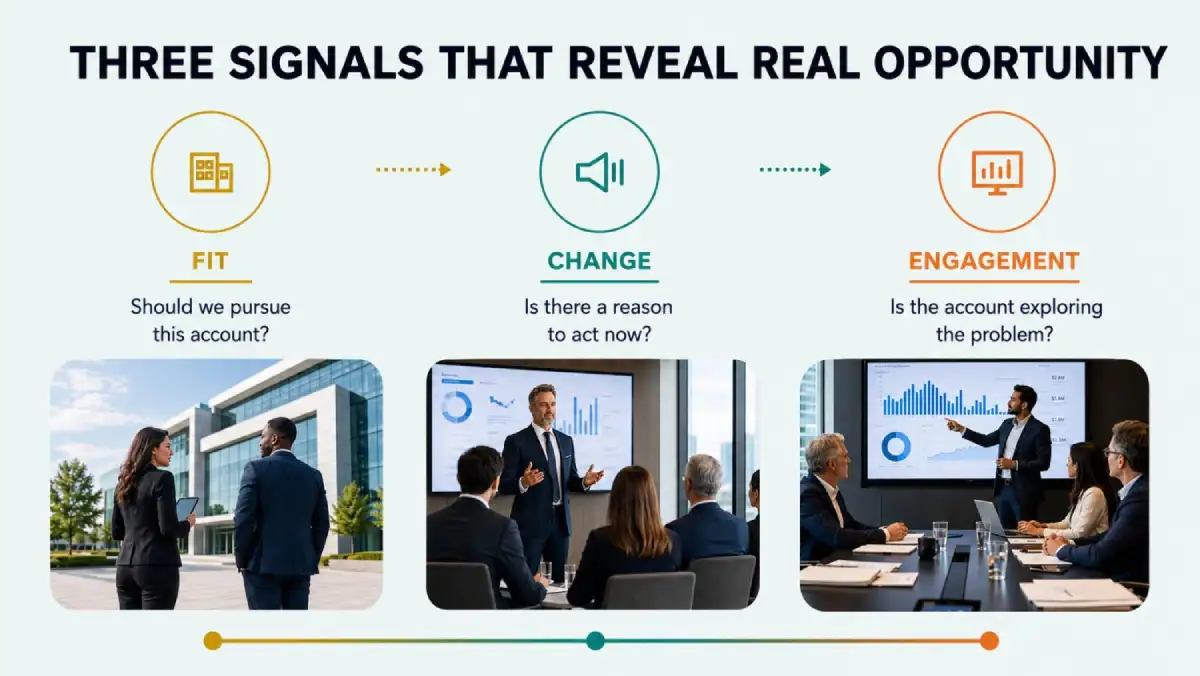
Fit: Should We Pursue This Account?
Account prioritization starts with fit. Before asking whether an account is active, ask whether it is an organization you are positioned to help and want to win.
Fit criteria may include organization type and size, market, geography, service-line mix, technology environment, strategic priorities, financial characteristics, and stakeholder structure. The right criteria depend on what you sell and where your company creates the most value.
A solution built for enterprise health systems should not score a regional medical group the same way. A company selling into payers needs different criteria from one selling clinical technology to hospitals.
AI can compare accounts against those criteria at scale, but it cannot fix a vague ideal customer profile. If the business has not defined what makes an account attractive, AI will produce a faster version of the same uncertainty.
A useful assessment should do more than assign a score. It should explain why the account fits, which problem may be relevant, what evidence supports the conclusion, what information is missing, and what would cause the team to deprioritize it.
Change: Is There a Reason to Act Now?
A strong-fit account can still have no reason to act now. The next question is whether something has created new pressure, a new priority, or a decision window.
In healthcare, those changes may include a new executive appointment, a merger or affiliation, a reimbursement or regulatory shift, a quality issue, a technology initiative, or a new growth priority.
Sales-intelligence platforms and public sources can surface these events. AI can help sellers interpret their relevance by asking what may have changed, who may be affected, whether the event connects to a problem the company solves, and whether there is enough evidence to justify a conversation.
A new executive, acquisition, or technology announcement is not automatically a buying signal. The event matters only when it creates a credible connection to a problem the seller can help address.
AI can surface possible urgency. The seller still has to test whether it is real.
Engagement: Is the Account Exploring the Problem?
Engagement adds another piece of the picture: whether people inside the account may already be exploring the problem, category, or your company.
First-party engagement comes through channels you own, including visits to relevant website pages, content downloads, webinar registrations, event attendance, email engagement, and requests for a conversation. Third-party intent data may indicate that an organization is researching related topics beyond your channels.
These signals still need context. A website visit does not establish a buying cycle, and a content download does not prove budget, authority, or urgency. Repeated activity can also mislead when the account is a poor fit or the engagement comes from someone outside the buying process.
Engagement becomes more useful when it is relevant, repeated, connected to the problems you solve, and spread across roles involved in the decision.
Combine the Evidence Before You Prioritize
Fit, change, and engagement answer different questions. Fit tells you whether the account belongs in your market. Change gives you a possible reason for why the timing is right. Engagement suggests the issue may already be active.
Together, those signals create a more useful basis for prioritization than any one of them can provide alone.
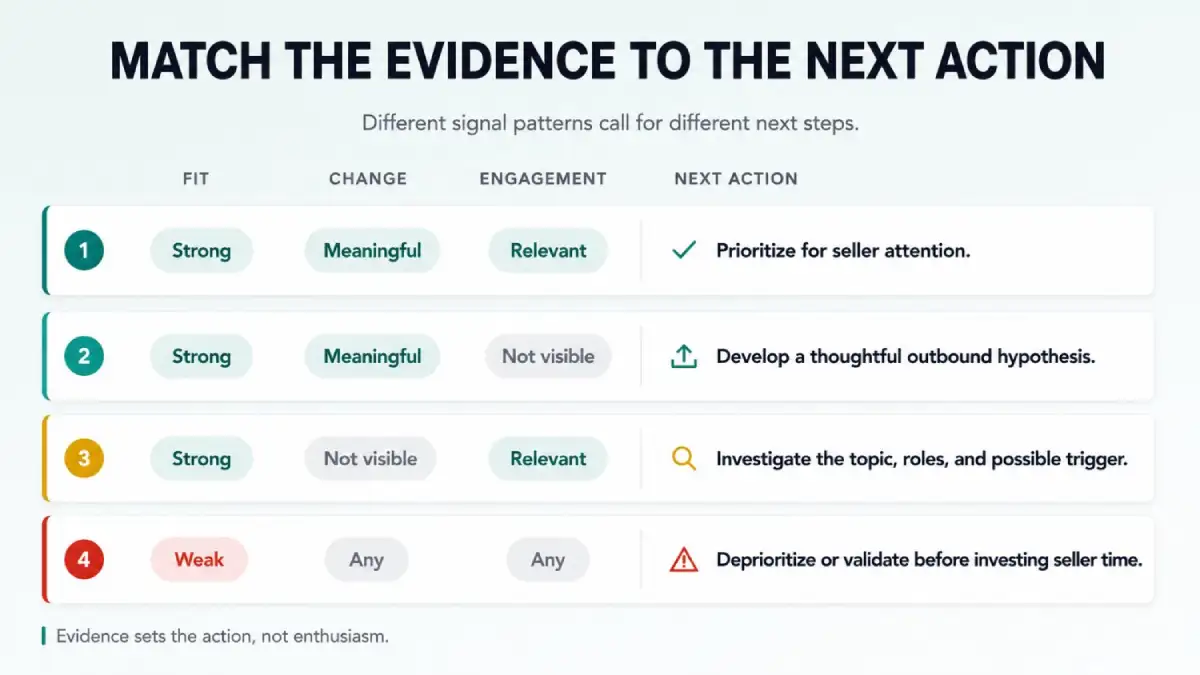
Not every account needs all three signals before sales acts. This is not a qualification gate. It is a way to match the strength of the evidence to the next action.
Turn the Evidence Into a Sales Hypothesis
Once an account rises on the priority list, AI can help the seller turn the evidence into a working solution hypothesis. The seller should be able to explain what changed, why it may matter, which problem may have become more urgent, who may be affected, what the account appears to be exploring, and what still needs to be learned.
A good hypothesis gives outreach a reason. It also gives the seller something to test rather than something to assume.
Instead of starting with, “This account is in our territory. Put it into a sequence,” the seller can begin with a more informed point of view:
“This account fits our market. Something meaningful may have changed, and relevant engagement suggests the issue may be active. We have a credible hypothesis worth testing.”
AI can organize the clues, but it cannot confirm the buyer’s priorities without a conversation.

Measure Focus, Not Activity
A stronger prioritization system should change where sellers spend time and what that time produces. The number of accounts scored, alerts generated, or automated messages sent tells you what the system did, not whether focus improved.
Track outcomes that show whether better prioritization is changing seller behavior and pipeline quality, such as meetings from priority accounts, opportunity creation by account tier, conversion by signal type, the percentage of pipeline coming from high-fit accounts, and seller time spent on priority accounts.
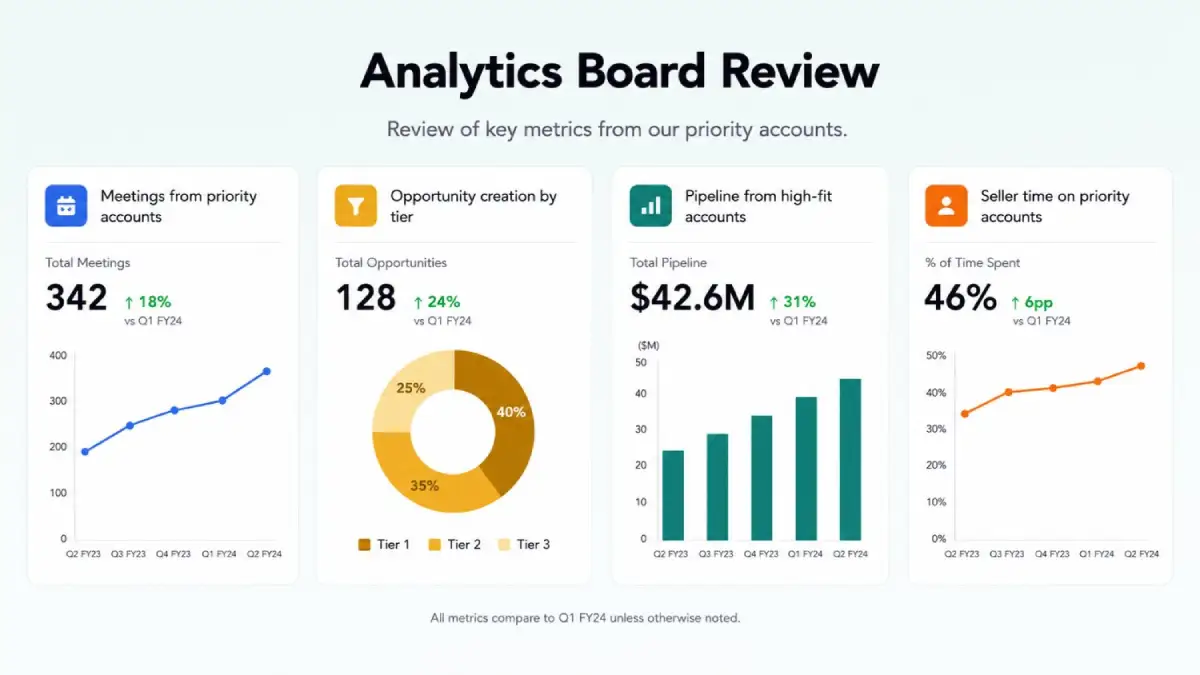
The point is not a more sophisticated score. It is a better allocation of seller attention.
Key Takeaways
- Account fit, company change, and buyer engagement answer different questions. Strong prioritization considers all three.
- A visible event or content interaction is not proof that an account is ready to buy.
- AI is most useful when it connects information from existing systems and explains why an account deserves attention.
- A vague ideal customer profile produces vague prioritization, even when AI is involved.
- The goal is not more automated outreach. It is more seller time directed toward accounts with a credible reason to engage.
- Every priority account should have a sales hypothesis that can be tested, challenged, and revised.